
This dessert is sometimes known as flan, or leche asada, but this is a Venezuelan Quesillo recipe. It is a delicious egg custard that is filled with small bubble holes and covered with silky caramel. Made with eggs, milk, sugar, and a touch of brandy that makes a delicious dessert.
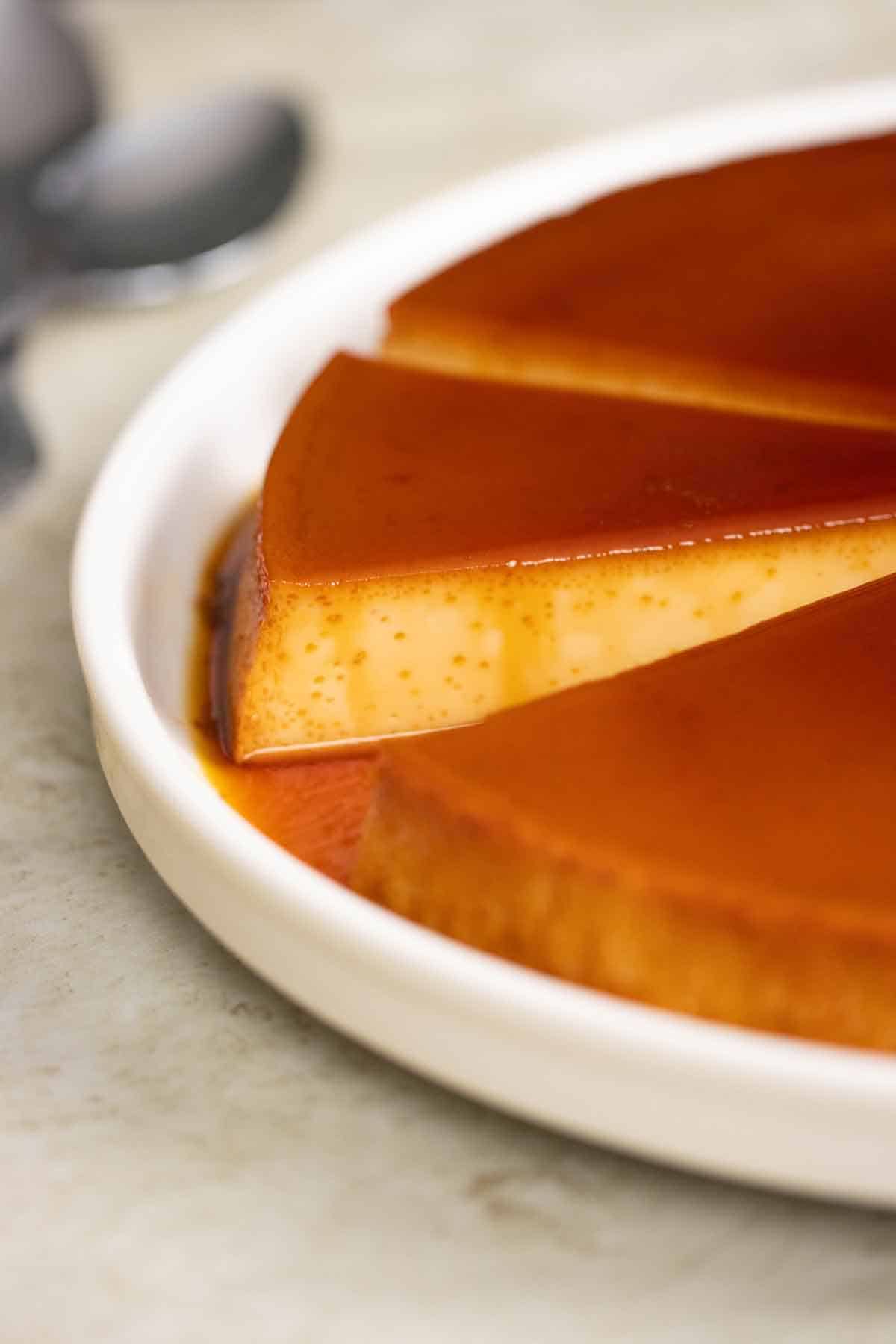
You probably haven’t heard of the Venezuelan Quesillo recipe because the quesillo is more popular in South American countries, unlike flan, which is popular even in European countries like Spain or France.
I grew up eating the typical cheese-flavored Puerto Rican flan and different flavored custards. So I can tell you that this is not a flan, but trust me when I tell you that the quesillo won’t disappoint!
It is different because it is filled with a lot of bubble holes that give the dessert a unique texture. The best part is the quesillo won’t have an eggy smell!
Jump to:
Why This Recipe Works
- Is a great dessert to make that is made with easy, simple steps.
- You can make this in the oven or on the stovetop!
Recipe Ingredients

- Eggs- You only need 4 large eggs. If your eggs are small than use 5.
- Milk- I use regular milk a lot with the mix of other types of milk. Some people use only regular milk, but a combination makes an amazing quesillo.
- Evaporated and powdered milk- Here is the secret for a good quesillo. The combination of powdered and evaporated milk gives this a unique flavor. Some people swear by a specific powdered milk brand, but I’ve tried from expensive to economical ones, and it makes little difference.
- Condense milk & sugar- Here is where the sweetness comes from. I have made this with half the amount of sugar for a friend, and it is still great. It will be less sweet but delicious.
- Vanilla extract- You need just a touch of vanilla.
- Brandy- Your favorite Brandy should do the trick. No need for an expensive one.
How to Make A Venezuelan Quesillo Recipe

- Photo 1: In a small pan, add your sugar and set it to high heat. Start stirring to prevent the sugar from burning. The sugar will look like a lumpy hot mess, but trust the process. Keep mixing, and once there are hardly any bumps, turn off the heat and keep stirring until silky and smooth. The residual heat will melt the rest of the lumps. Some people buy premade caramel, but caramel is easy to make.
- Photo 2: Now that your caramel has a shiny brown color, you need to quickly pour the caramel into your mold. Give the mold a little swirl to spread the caramel. Be very careful because your caramel and mold will be extremely hot.

- Photo 3: In a blender, add the rest of the ingredients. No need to add the eggs one by one. Mix it for 2 minutes on high to make sure that the ingredients are well incorporated
- Photo 4: Strain the mix over the mold. You will hear some cracking as you do this, but that’s just the caramel because of the difference in temperature. Don’t worry, your caramel will be just fine.

- Photo 5: Preheat the oven 350℉. Cover the mold with foil to make sure no water gets in. To cook the quesillo in the oven, we need to make a bain marie or water bath. Put your mold in a bigger pan and add hot water until it reaches about half of the mold.
- Photo 6: Bake for 1 hour and 30 minutes. Let it rest at room temperature before cooling in the fridge for at least 2 hours. Run a knife through the borders of the mold, put a big plate over the mold, and flip. Your quesillo will come right off.
Recipe Tips
- Toppings. The quesillo is good as is, but if you want to add a topping, I suggest adding a swirl of dulce de leche or whipped cream.
- Stovetop cooking. You can make a quesillo on the stovetop using the same bain marie method. Just cover the pot and make sure that you constantly check on it because you will need to add more water to it. You can also use a flanera on the stovetop.

More Latin Dessert Recipes

💬 Did this taste like home? If you enjoyed this Venezuelan Quesillo recipe, give it a 5-star rating and leave a comment or question below.
Watch us on YouTube or follow along on our Facebook Page, on Instagram, or on Pinterest.

Quesillo
Ingredients
- 1 cup sugar (240g)
- 2 cups milk (475ml)
- 14 onces condensed milk (396g)
- 4 large eggs
- ½ cup dry milk (65g)
- 2 tablespoons vanilla extract
- 2 tablespoons brandy
- ½ cup sugar (127g)
Instructions
- Preheat the oven to 350℉.
- Make the caramel. In a small pan over medium-high heat, add 1 cup of sugar. Gently stir the sugar around with a spoon. The sugar will form lumps. Keep stirring until most of the lumps have melted. This can take anywhere from 8 to 10 minutes. Once there's not a lot of sugar lumps left, turn off the heat but keep stirring until the caramel is smooth and lump free.
- Once the caramel is finished, pour it into your mold, but be very careful because the caramel will be very hot. Use a 9×3 round mold or a flanera. Set it aside until the quesillo mix is ready.
- In a blender, add the milk, eggs, condensed milk, dry milk, vanilla extract, brandy, and sugar. Blend for 2 minutes on high speed. Strain the quesillo mix over the mold with the caramel. Cover the mold with foil so no water goes in.
- Put the mold in a bigger mold or pan to make a bain marie or water bath. Center the mold in the middle and add hot water until it reaches about halfway up the mold.
- Plate the water bath in the oven. Cook for 1 hour and 30 minutes. Take the quesillo out of the oven and out of the water bath, and let it rest for 30 minutes at room temperature. Uncover the quesillo and insert a toothpick in the middle to check for readiness. The toothpick should come out clean.
- Refrigerate for at least 2 hours. When ready to serve, take it out of the fridge. If needed, run a knife around the border of the mold. Place a larger plate on top of the mold and quickly flip it.
- Lift the mold, cut, and serve. Buen provecho!
Recipe Notes
- Caramel- The caramel is very simple to make. Just make sure to constantly stir, so it won’t burn.
- Cooking time- The quesillo takes 1:30, but this is specifically in a 9×3 mold. If you have a smaller but taller mold, it can take longer. Make sure to test it after baking to make sure it is cooked.
- Flan- The quesillo is very similar to the traditional Puerto Rican flan, but the texture is different. Some of the ingredients are also different.
Nutrition
*The nutrition information is automatically calculated, so this is only an approximation.
Leave a Comment